Best Nano Tank for Shrimp: How to Choose Size, Type, Filter and Light
A buying guide to nano tanks for freshwater shrimp: which size to pick, rimless vs framed glass, all-in-one kits vs separate gear, shrimp-safe filtration, lids and lighting.
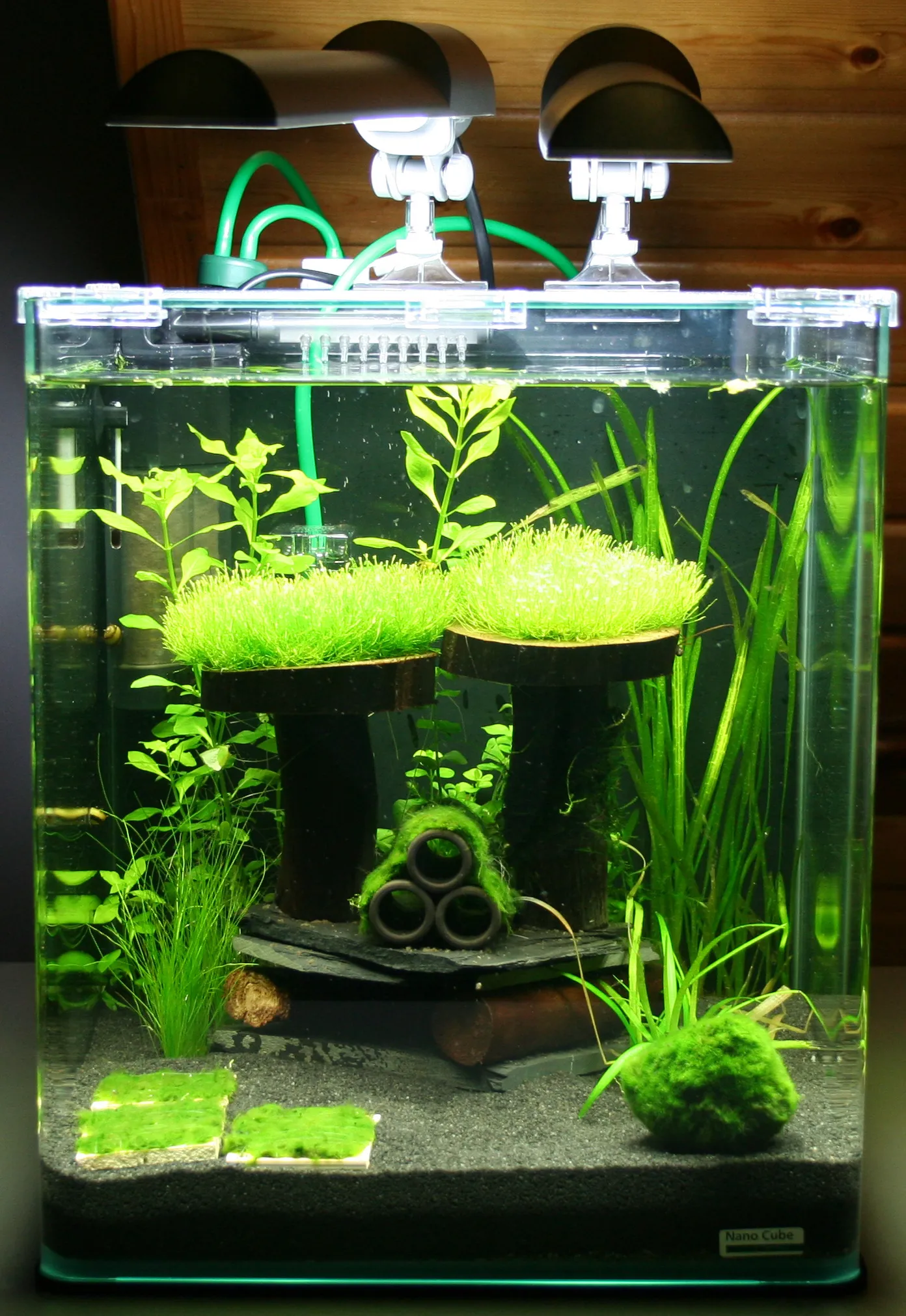 Photo: Sergej Schink, CC BY-SA 3.0
In this guide
Short answer: for most people the best nano tank for shrimp is a 5 to 10 gallon (20–40 L) glass tank with a sponge filter (or a filter with a covered intake), a lid, and a simple LED light for low-light plants. Shape matters more than brand: a tank with a bigger footprint gives shrimp more floor and more surface for biofilm. Rimless or framed, kit or separate parts, is mostly about looks and budget.
What makes a tank good for shrimp
Shrimp don’t need much. What they do need is stable water, no strong suction and lots of surface to graze. So a good shrimp tank has:
- Enough water volume to keep temperature and parameters steady
- A wide bottom rather than a tall, narrow shape
- Filtration that can’t swallow babies, which are only a millimeter or two long
- Some way to stop escapes, either a lid or a lower water level
- Light for plants, not for the shrimp
Everything below follows from those five points.
1. Size: how many gallons?
Sources agree that bigger is more stable, but they draw the minimum in different places:
| Source | What it says |
|---|---|
| Shrimp Science | Absolute minimum 1 gallon; otherwise “go for the largest aquarium you can fit and afford” |
| Shrimpy Business | Prefers a 10 gallon over a 5 gallon, because the colony has room to grow |
| Common beginner advice | 5 gallons as a starting point |
Our take: 5 gallons is the smallest size we’d suggest for a first tank, and 10 gallons is easier still. Tanks under about 3 gallons can work, but a small mistake (overfeeding, a hot day, a missed top-off) changes the water much faster. See our 5 gallon shrimp tank setup for a complete build.
How many shrimp fit? Shrimp Science suggests 10–15 shrimp per gallon, nearer 10 in small tanks. Shrimpy Business is more cautious and suggests 2–5 per gallon for beginners. The full numbers are in how many cherry shrimp per gallon.
Shape and footprint
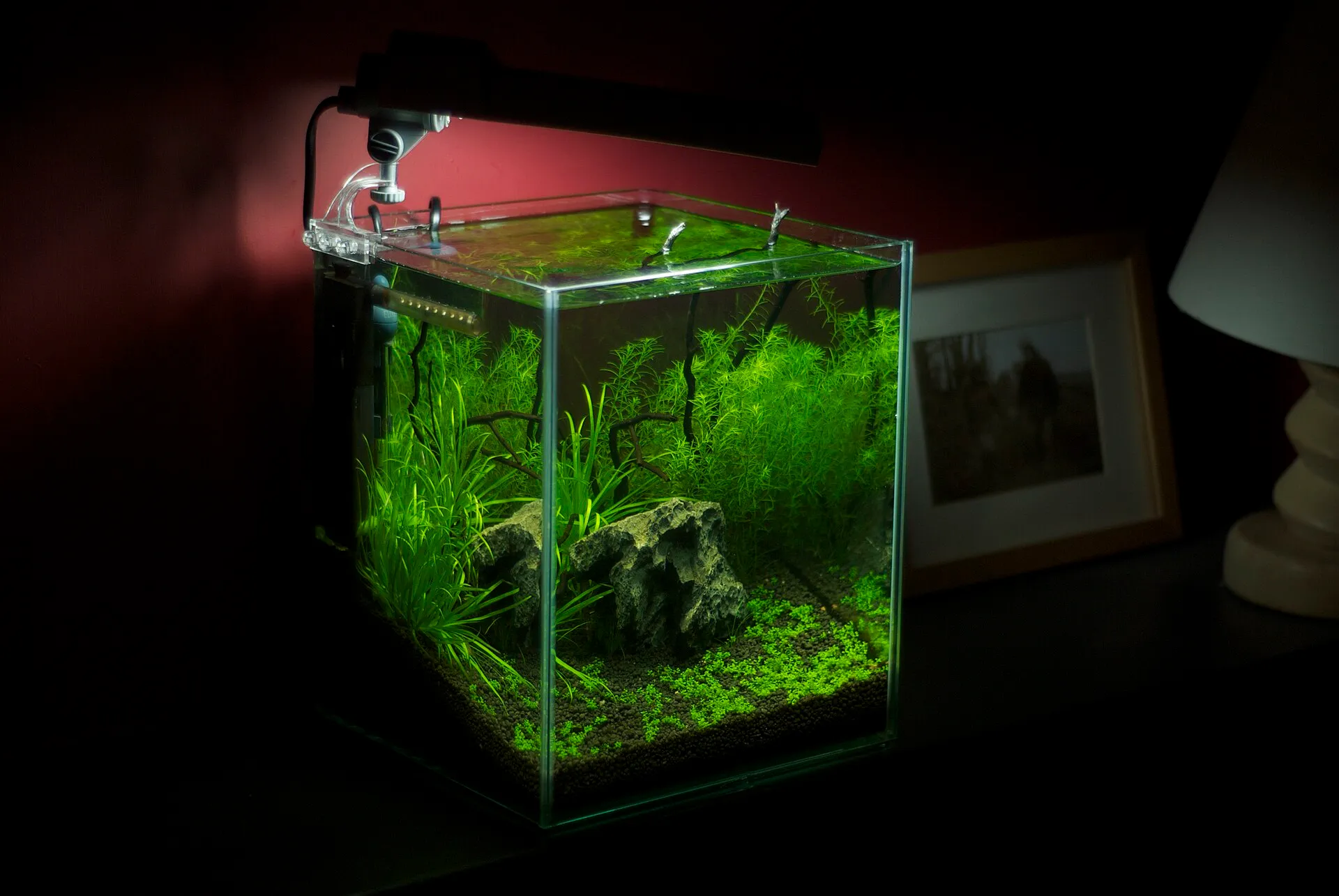
Shrimp live on the bottom and on surfaces, not in open water. Shrimp Science names the long rectangular tank as its first choice for beginners because it has the most water surface (better gas exchange) and the most floor and glass for biofilm. Cubes fit on small shelves but give less room. Bowls are hard to clean and most filters won’t fit them.
| Shape | Good for shrimp? | Notes |
|---|---|---|
| Long / standard rectangle | Best | Most floor, most surface, fits any filter |
| Cube | Good | Compact; less floor per gallon |
| Tall column | Fair | Lots of wasted open water |
| Bowl | Fair | Hard to clean, few filter options |
2. Rimless vs framed glass
| Rimless | Framed (plastic rim) | |
|---|---|---|
| Looks | Clean, modern | More traditional |
| Lid | Needs a separate glass lid or clips | Standard lids sit on the rim |
| Glass | Often low-iron (extra clear) | Usually standard glass |
| Price | Usually higher | Usually lower |
| For shrimp | Fine | Fine |
Low-iron glass (sold under names like Starfire or Optiwhite) contains much less iron than ordinary glass, so it lacks the green tint. Reef Builders notes the difference is most visible in thick glass; in a small nano tank with thin panes it’s subtle. It costs more, and it does nothing for the shrimp.
A rimless tank’s main drawback for shrimp keepers is the lid (see below). Otherwise, choose the one you like looking at.
3. All-in-one kit or separate parts?
All-in-one (AIO) nano kits
Kits such as the Fluval Spec or Marineland Portrait hide the filter in a rear chamber and come with a light. They look tidy and are easy to buy.
The catch for shrimp: AIO filters have intake slots and a pump, and both are usually designed with fish in mind. Baby shrimp can be pulled in, and the flow can be stronger than shrimp prefer. Common fixes:
- Cover the intake slots with a fine sponge or stainless mesh
- Turn the outlet toward the glass or turn the pump down if it’s adjustable
- Shrimp Science goes further and advises beginners to avoid aquariums with a built-in filter; another option is to run a sponge filter in the main chamber
Separate tank, sponge filter and light
A bare glass tank plus a sponge filter, an air pump and a clip-on LED costs about the same as a kit and is the classic shrimp setup. A sponge filter can’t suck in babies, gives gentle flow and becomes a grazing surface. We explain why in our sponge filter guide.
| AIO kit | Separate parts | |
|---|---|---|
| Looks | Tidy, equipment hidden | Sponge and tubing visible |
| Baby-safe out of the box | Usually not | Yes (sponge filter) |
| Flexibility | Fixed light and filter | Swap anything |
| Best for | Display tanks, adults only, or with intake covered | Breeding colonies, first tanks |
4. Filtration: what to look for
Whatever filter you choose, it should:
- Not let shrimplets in. A sponge filter does this by design. For hang-on-back, internal or AIO filters, slide a pre-filter sponge over the intake. Aquarium Co-Op describes it as a foam cylinder that stops baby fish and dwarf shrimp from being pulled into the filter, and suggests squeezing it out in old tank water about once a month.
- Give gentle flow. Shrimp graze in calm water.
- Hold plenty of bacteria. The filter is where the nitrogen cycle happens. A new filter has none, so you still need to cycle the tank before adding shrimp.
5. Lid or no lid?
Here the sources are relaxed but not unanimous. Shrimp Science says a lid isn’t required and calls escapes very unlikely, but lists real benefits:
- Makes escapes much harder (Amano shrimp have the strongest reputation as climbers)
- Cuts evaporation a lot, so the water’s TDS creeps up more slowly and you top off less
- Keeps heat in and stops splashes from air bubbles
The downsides: condensation can rot floating plant leaves, and a lid that blocks light slows plant growth. If you skip the lid, keep the water level a little below the rim; Shrimp Science links its own single escape to filling the tank too close to the top.
Shrimp that try hard to climb out are often reacting to bad water, so treat it as a warning sign. See why are my cherry shrimp dying.
6. Lighting
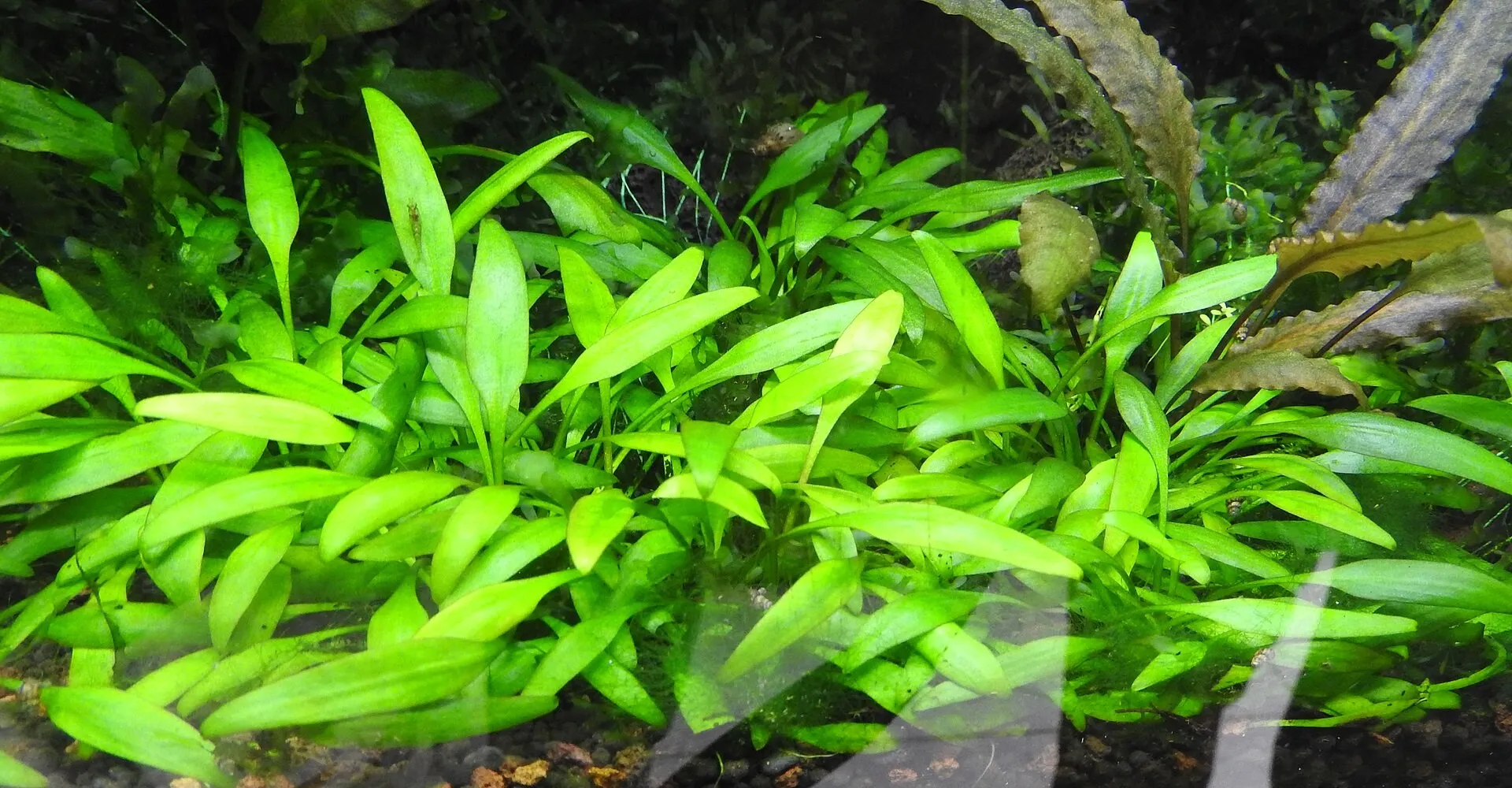
Shrimp don’t need bright light; the plants do. Shrimp tanks usually use low-light plants like Java moss, Java fern, Anubias, Cryptocoryne and Bucephalandra. The Shrimp Farm puts these in the low-light range (about 10–30 µmol PAR) and recommends roughly 8 hours of light a day on a timer; longer periods mainly feed algae. Very strong lights without added CO2 can let algae overrun slow plants.
So a basic nano LED, clip-on or hanging, is enough. The light that comes with most kits is fine for low-light plants.
7. Other gear to budget for
| Item | Needed? | Why |
|---|---|---|
| Heater | Depends on your room | Cherry shrimp handle normal room temperature; Caridina and warm-water species need stable heat. See cherry shrimp water parameters |
| Thermometer | Yes | Cheap insurance against summer heat |
| Test kit (ammonia, nitrite, nitrate, GH, KH) | Yes | You can’t see water quality |
| TDS meter | Recommended | Quick check for top-offs and water changes |
| Substrate | Yes | Inert gravel or sand for Neocaridina; active soil for Caridina. See Neocaridina vs Caridina |
| Dechlorinator | Yes | For tap water |
Quick picks by situation
| Your situation | What to look for |
|---|---|
| First shrimp tank, cherry shrimp | 5–10 gal long glass tank, sponge filter, lid, clip-on LED |
| Small desk or shelf | 3–5 gal cube or AIO kit with intake covered |
| Breeding for numbers | 10 gal or larger, sponge filter only, lots of moss |
| Display tank that should look clean | Rimless low-iron tank, glass lid, filter with pre-filter sponge |
| Caridina (crystal or bee shrimp) | 10 gal or larger for stability, active soil, RO water; see how to set up a Caridina tank |
Frequently asked questions
What size tank is best for shrimp?
A 5 to 10 gallon tank is the most common recommendation for a first colony. Smaller tanks can work but change temperature and parameters faster.
Is a 2.5 or 3 gallon tank big enough for cherry shrimp?
It can hold a small group, but there’s little margin for mistakes. If you go that small, keep stocking low, feed lightly and test the water often.
Are all-in-one nano tanks safe for shrimp?
Yes, once you cover the filter intake with a fine sponge or mesh so babies can’t be sucked in, and reduce the flow if it’s strong.
Do shrimp need a rimless tank?
No. Rimless tanks are a style choice. A framed tank with a standard lid works just as well, and is often cheaper.
Do I need a lid on a shrimp tank?
Not strictly. A lid cuts evaporation and prevents the occasional escape, but many keepers run open tanks with the water a little below the rim.
Sources
- Shrimp tank shapes & sizes (Shrimp Science)
- How much space do shrimp need to thrive? (Shrimpy Business)
- Does a shrimp tank need a lid? The pros & cons (Shrimp Science)
- How to use a pre-filter sponge (Aquarium Co-Op)
- Lighting for your planted tank (The Shrimp Farm)
- What is a Starfire glass aquarium? (Reef Builders)