Neocaridina vs Caridina Shrimp: Which Should Beginners Keep?
Neocaridina or Caridina? Compare water parameters, price, difficulty and breeding to pick the right freshwater shrimp for your first nano tank.
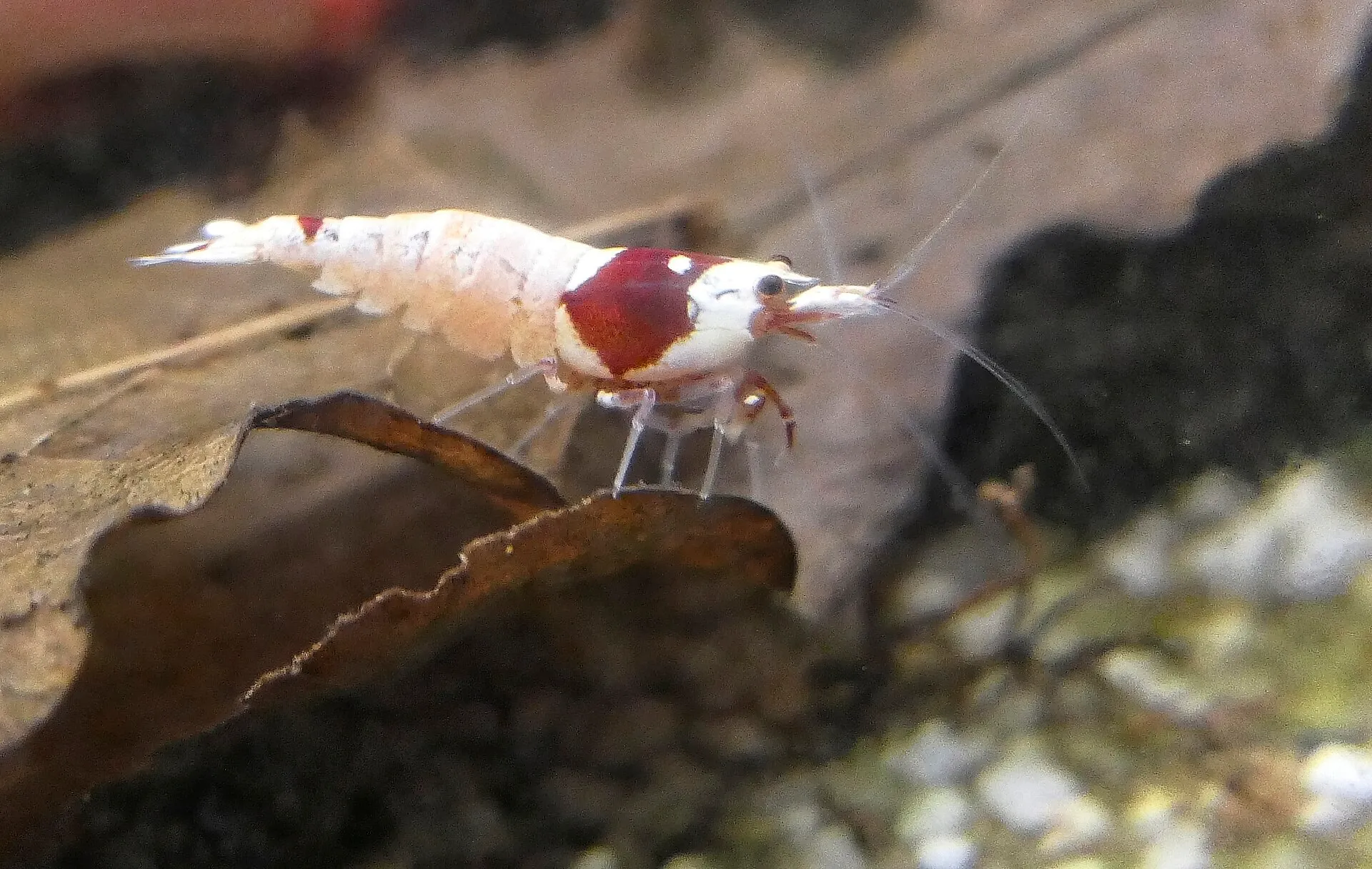 Photo: 5snake5, CC0
In this guide
Short answer: start with Neocaridina (cherry shrimp and their color variants). They tolerate a wide range of tap water, cost less and breed easily. Move to Caridina (crystal red, bee shrimp) once you’re comfortable keeping stable water, ideally with RO water and active soil.
Side-by-side comparison
| Neocaridina | Caridina (bee/crystal) | |
|---|---|---|
| Examples | Cherry, Blue Dream, Yellow, Orange | Crystal Red, Crystal Black, Taiwan Bee |
| pH | 6.5–8.0 | 5.8–6.8 |
| GH | 6–12 dGH | 4–6 dGH |
| KH | 2–8 dKH | 0–2 dKH |
| TDS | 150–300 ppm | 100–200 ppm |
| Temperature | 18–27 °C | 18–24 °C |
| Tap water | Usually fine | Usually needs RO water |
| Difficulty | Easy | Moderate to hard |
| Price per shrimp | Low | Moderate to very high |
Why Neocaridina are better for beginners
- Forgiving water: most dechlorinated tap water with moderate hardness works.
- Easy breeding: a small group can turn into a colony of hundreds in a few months.
- Cheap to replace: mistakes cost less while you learn.
- Lots of colors: red, blue, yellow, orange, green and black.
When Caridina make sense
Caridina reward keepers who want a challenge. They need soft, acidic water, usually made from RO water remineralized to a precise GH, and an active substrate that buffers pH. In return you get striking patterns and high-grade lines that are prized by breeders.
Can you keep both in the same tank?
Not ideally. Their preferred water parameters barely overlap, so one of the groups will always be stressed. Neocaridina color variants also crossbreed with each other and turn back into wild-type brown shrimp over generations. Keep one color per tank if you want to keep the colors true.
Next steps
- Check if your tap water suits Neocaridina with our Water Parameter Checker.
- Losing shrimp already? Read why cherry shrimp die.