How to Acclimate Shrimp: Step-by-Step Drip Acclimation
How to acclimate new shrimp with the drip method: what you need, drip rate, how long it takes, how to handle shipped shrimp and the ammonia spike, and what to do in the first days.
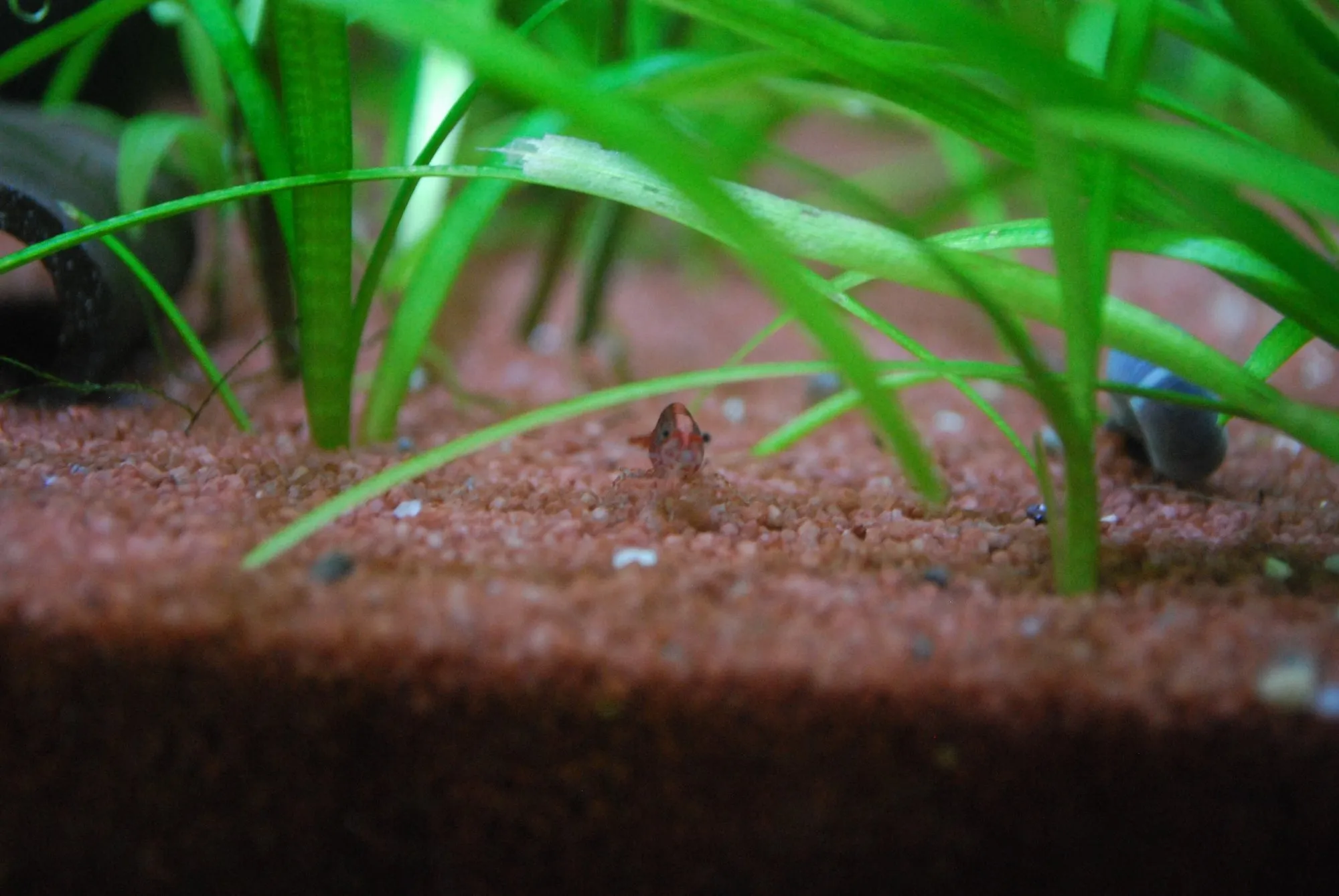 Photo: Michael Skiba, CC BY-SA 3.0
In this guide
Short answer: to acclimate shrimp, first let the bag reach tank temperature, then pour the shrimp and their water into a clean container and drip tank water in through airline tubing at about 1–2 drops per second. Keep going for 1–3 hours, until the water has roughly tripled or quadrupled. Then net the shrimp into the tank and throw away the container water. Keep the lights low and don’t feed for the rest of the day.
Why acclimation matters
Shrimp handle bad water better than sudden changes in water. The seller’s tank almost never matches yours exactly: the pH, GH, KH, TDS and temperature can all be different. Dropping shrimp straight into new water can stress them, and the losses often show up days later, during the next molt.
That’s why “my new shrimp died in the first week” is one of the most common complaints, and why poor acclimation is on our list of why cherry shrimp die. Drip acclimation spreads the change over a couple of hours instead of a few seconds.
What you need
| Item | Notes |
|---|---|
| Container or small bucket | Aquarium Breeder suggests at least 3–5 times the volume of the bag |
| Airline tubing | About 1–2 m, long enough to reach from the tank to the container |
| Flow valve or a knot | To control the drip |
| Shrimp net | Fine mesh |
| TDS meter (optional) | To see how different the waters are |
| Towel | For drips and to dim the light |
Step-by-step drip acclimation
1. Dim the lights
Turn off the tank light and dim the room before opening the bag. Shrimp are calmer in low light; both Shrimp Science and Aquarium Breeder recommend this step.
2. Match the temperature
- Regular plastic bag: float it, still sealed, in the tank. Aquarium Breeder says this takes about 15–20 minutes; Aquarium Co-Op suggests 10–15 minutes for fish.
- Breathable bag (for example Kordon Breather bags): don’t float it, because it needs air on its surface to exchange gas. Leave it next to the tank in a dim room for about 30–60 minutes instead.
3. Move the shrimp to the container
Open the bag and gently pour the shrimp with their water into the container. If the water is shallow, tilt the container so the shrimp stay covered.
4. Start the drip
- Put one end of the airline tubing in the tank and secure it so it can’t fall out.
- Start a siphon by sucking briefly on the other end (or use a valve kit that has a starter).
- Tie a loose knot or close the valve until you get a steady drip.
- Place the container lower than the tank so gravity keeps the drip going.
Drip rate: most sources say 1–2 drops per second. The Shrimp Farm uses 2–3 drops per second. Slower is gentler.
5. Wait until the water has tripled
The goal is to replace most of the original bag water with tank water. Sources describe the end point a little differently:
| Source | When to stop | Typical time |
|---|---|---|
| Shrimp Science | About 3× the starting volume, ~75% new water | 1–2 hours, longer for sensitive species |
| Aquarium Breeder | Volume has tripled | 1–3 hours |
| The Shrimp Farm | 4× the starting volume (¼ bag water, ¾ tank water) | About 1.5–2.5 hours |
If the container fills before you’re done, pour out some of the water (not the shrimp) and keep dripping.
How long for Caridina? Crystal and bee shrimp are more sensitive than cherry shrimp, so use the slow end of these ranges, especially if the TDS or pH of the bag water is very different from yours. Aquarium Breeder mentions a formula for this, hours = (TDS change ÷ 2) + 2.5 × (pH change ÷ 0.1), but calls it overkill. We found no study behind it, so treat it as a rough rule of thumb. Very long acclimations aren’t better: Aquarium Breeder says the up-to-24-hour sessions some people do are “just too much.”
6. Net the shrimp into the tank
Catch the shrimp with a net and move them to the tank. Don’t pour the container water into your tank. It may carry ammonia, pests or diseases from the seller’s system. Every source we checked agrees on this.
7. Keep it calm for the first day
- Keep the tank light off for a few hours. Aquarium Breeder suggests about 4 hours; The Shrimp Farm suggests leaving it off for the first 24 hours.
- Don’t feed for 12–24 hours. New shrimp often hide and won’t eat anyway.
- Expect them to hide, lose some color or sit still for a day or two. That’s normal stress.
Shipped shrimp and the ammonia problem
Shrimp ordered online can spend a day or more in a sealed bag. During that time, ammonia from their waste builds up, and so does CO2, which lowers the pH. At low pH most ammonia stays in its less toxic form.
When you open the bag, CO2 escapes, the pH rises, and more of that ammonia turns toxic. Aquarium Co-Op describes it burning the gills of fish; Aquarium Breeder says toxicity rises “exponentially.” This is why advice for shipped animals differs:
- Shrimp guides still drip acclimate shipped shrimp. Shrimp Science and Aquarium Breeder both suggest adding a drop or two of an ammonia-binding conditioner such as Seachem Prime to the container, and Aquarium Breeder suggests a shorter drip for shrimp that arrived in a sealed plastic bag.
- Aquarium Co-Op recommends “plop and drop” for fish bought online: match temperature, then move them straight into the tank without mixing water. It doesn’t give shrimp-specific advice, and its forum users disagree on whether the same applies to shrimp.
In short, we found no clear consensus. For shrimp that spent a long time in a sealed bag, a shorter drip with a conditioner seems the safer middle ground. For healthy shrimp that arrived overnight, a normal drip is standard. Shrimp Science also notes that the CO2 problem is bigger when shrimp stay bagged for days rather than arriving next-day.
Common mistakes
| Mistake | Why it’s a problem |
|---|---|
| Dumping shrimp and bag water into the tank | Adds ammonia and possible pests; sudden parameter change |
| Skipping acclimation because “they’re cherry shrimp” | Neocaridina are hardy, but large GH or TDS jumps still cause molting problems |
| Dripping too fast | Defeats the purpose; the change is as sudden as a quick pour |
| Adding shrimp to an uncycled tank | No acclimation can protect them from ammonia and nitrite |
| Floating a breathable bag | It needs air to exchange gas |
| Feeding right away | Stressed shrimp don’t eat; leftovers foul the water |
Is it normal to lose a few shrimp?
Losing one or two shrimp in the first week or two can happen even with careful acclimation, because shipping and moving are stressful. Aquarium Breeder calls the first month a “red zone.” If shrimp keep dying, look at the bigger picture: compare your parameters with the seller’s, check for molting problems, and read why are my cherry shrimp dying. Also make sure a still shrimp is really dead and not just a molt.
Frequently asked questions
How long should I drip acclimate shrimp?
Usually 1–3 hours at 1–2 drops per second, until the water in the container has roughly tripled. Go slower for Caridina and when your water is very different from the seller’s.
Can I acclimate shrimp without a drip kit?
Yes. Plain airline tubing with a loose knot works. You can also add a little tank water to the container by hand every 10–15 minutes, the way Aquarium Co-Op’s cup method does for fish. It’s less gradual than a drip but follows the same idea.
Should I put the bag water in my tank?
No. Net the shrimp out and throw the bag or container water away.
Do cherry shrimp need drip acclimation?
They’re hardier than Caridina, but drip acclimation is still recommended because it costs only an hour or two and reduces losses from sudden changes.
When can I feed new shrimp?
Wait 12–24 hours. Then feed a small amount; see best food for cherry shrimp.